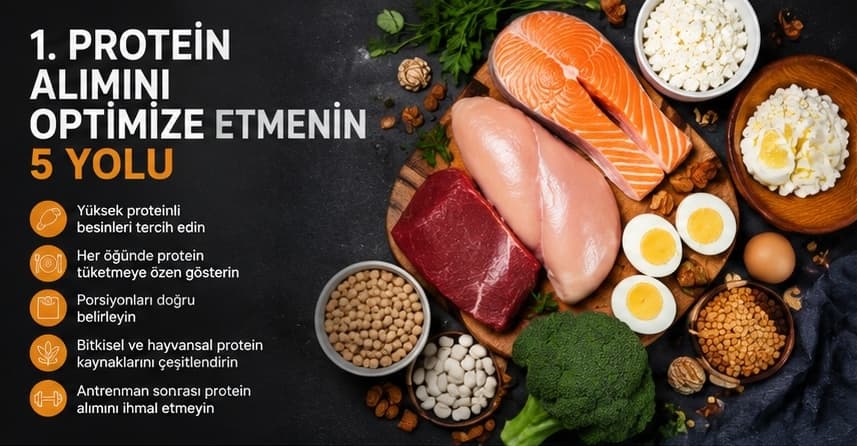
Protein is the body's primary building block. Yet most people don't realize they're falling short of their daily needs. Research consistently shows that even sedentary adults need 0.8-1.0 grams per kilogram of body weight. For active individuals and those who exercise, that number climbs to 1.6-2.2 grams per kilogram.
1. Add a Protein Source to Every Meal
The most effective strategy is distributing protein evenly throughout the day. Since the body can only synthesize a limited amount of protein at once, targeting 25-40 grams per meal is more efficient than saving it all for dinner.
Practical examples:
- Breakfast: 2 eggs + 100g Greek yogurt = ~28g protein
- Lunch: 150g chicken breast + vegetables = ~45g protein
- Dinner: 200g salmon + 100g quinoa = ~52g protein
Key insight: Protein synthesis is limited by amino acid transporter capacity. Spacing meals 3-4 hours apart maximizes absorption.
2. Combine Animal and Plant Proteins
Complete proteins containing all essential amino acids are mostly animal-based: meat, fish, eggs, dairy. However, plant-based diets can close this gap with smart combinations.
| Protein Source | Protein per 100g | Bioavailability |
|---|---|---|
| Egg white | 11g | 97% |
| Salmon | 25g | 92% |
| Chicken breast | 31g | 90% |
| Lentils | 9g | 52% |
| Quinoa | 14g | 83% |
Plant-based combos:
- Rice + legumes (complementary amino acid profile)
- Peanut butter + whole grain bread
- Lentil soup + yogurt
3. Use Protein Supplements Strategically
Protein powder is a complement, not a solution. It can't replace whole foods, but it's a practical option on heavy training days or when you're struggling to hit your targets.
Whey protein has the highest biological value of any protein source, largely due to its leucine content — the branched-chain amino acid that directly triggers muscle protein synthesis.
4. Plan Protein-Rich Snacks
Hunger between meals usually leads to carb-heavy choices. Get ahead of it with:
- Cottage cheese (150g = 17g protein) + fruit
- Hard-boiled eggs (1 egg = 6g protein) + tomato
- Edamame (100g = 11g protein) — high fiber, filling
- Greek yogurt (200g = 20g protein) + nuts
5. Track Your Intake
Without monitoring, hitting protein goals is largely guesswork. Nutrition tracking tools like LiforaFit show your macro breakdown in real time, helping you spot gaps before they compound.
Benefits of tracking:
- Instantly identify under-protein meals
- Adjust strategy based on weekly averages
- Share data with your dietitian for evidence-based coaching
Protein optimization isn't about a single superfood or supplement. It's built on systematic, sustainable habits. Working with a registered dietitian to set your personal protein target is the most critical first step.